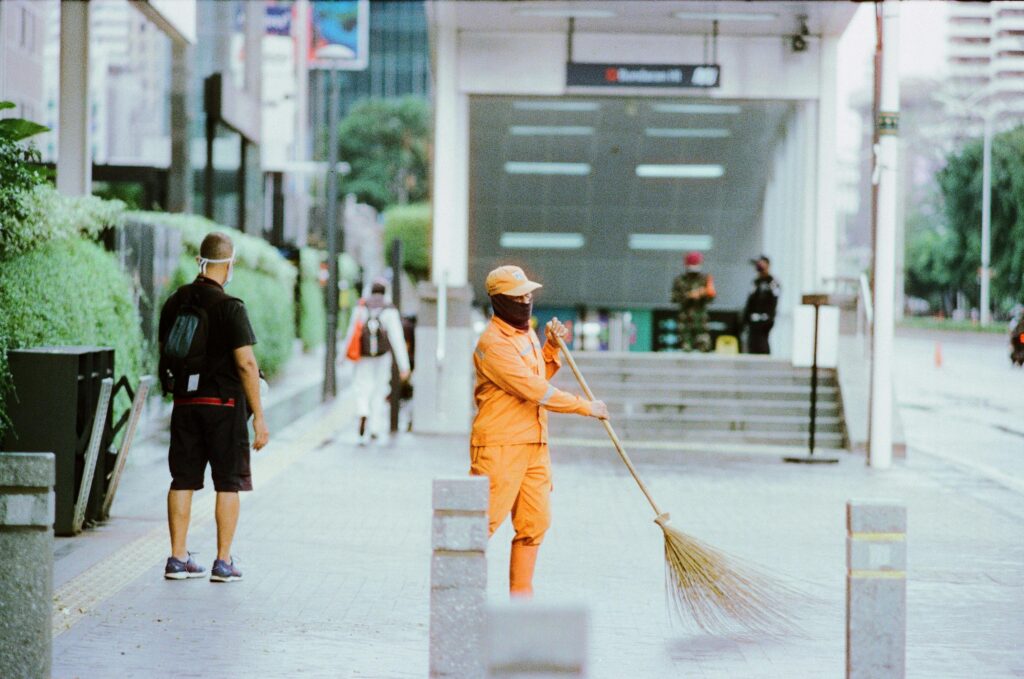
Cleaning and janitorial work looks simple from the outside, but insurance claims are common: slip-and-falls after mopping, accidental damage to floors and fixtures, and employee injuries from repetitive motion or chemical exposure. A good janitorial business insurance setup also helps you win contracts because many commercial clients require proof that you’re insured (and often bonded).
This guide explains what cleaning business insurance covers, what “bonded vs insured” really means, how much insurance can cost in 2026, and how to request quotes that match what property managers and commercial customers ask for.
What insurance does a cleaning business need?
Most cleaning companies build coverage around four essentials: general liability, a janitorial bond, workers’ compensation (if you have employees), and commercial auto (if you own vehicles) or hired and non-owned auto (if staff use personal cars).
A strong “core stack” for cleaning services:
- General liability insurance (foundation)
- Janitorial bond (fidelity bond / employee dishonesty protection for clients)
- Workers’ compensation (when you have employees; often required by state law)
- Commercial auto or HNOA (depending on vehicle ownership/use)
- Tools & equipment / business personal property coverage (for machines and supplies)
Companies

Travelers Insurance Complete Hub: BOP, Commercial Property, Workers Comp & Liability Coverage 2026
Travelers Insurance delivers sophisticated commercial insurance solutions for mid-market businesses including businessRead more
The Hartford Insurance Complete Hub: BOP, Workers Comp, Professional Liability & Cyber Coverage 2026
The Hartford Insurance provides comprehensive small to mid-size business insurance including businessRead more
State Farm Insurance Complete Hub: Commercial Auto, BOP, Workers Comp & Business Coverage 2026
State Farm Insurance is America’s largest property/casualty insurer with extensive commercial insuranceRead more
Progressive Insurance Complete Hub: Commercial Auto, Trucking, BOP & Small Business Coverage 2026
Progressive Insurance is the leading commercial auto insurance company in the USARead more
Next Insurance Complete Hub: Instant Workers Comp, General Liability, BOP & Professional Coverage 2026
Next Insurance revolutionizes small business insurance with instant online quotes and bindingRead moreNationwide Insurance Complete Hub: BOP, Farm, Commercial Auto, Workers Comp & Liability Coverage 2026
Nationwide Insurance offers versatile commercial coverage including business owners policy BOP, farmRead more
Liberty Mutual Insurance Complete Hub: Workers Comp, Commercial Auto, BOP & Business Coverage 2026
Liberty Mutual Insurance delivers comprehensive commercial solutions including workers compensation insurance, commercialRead moreHiscox Insurance Complete Hub: Professional Liability, Cyber, General Liability & BOP Coverage 2026
Hiscox Insurance specializes in professional liability insurance (E&O), cyber liability insurance, generalRead more
Chubb Insurance Complete Hub: Workers Comp, BOP, High Value Property, Cyber & Commercial Coverage 2026
Chubb Insurance (formerly ACE Limited) provides premium commercial insurance solutions including workersRead more
AmTrust Insurance Complete Hub: Workers Comp, BOP, General Liability, Commercial Auto & Cyber Coverage 2026
AmTrust Financial Services offers comprehensive insurance solutions including workers compensation insurance, businessRead more

General liability insurance for cleaning businesses
Liability insurance for a cleaning business is the policy most clients care about first because it addresses the most common third-party claims: bodily injury and accidental damage to a client’s property.
Examples of general liability claims in janitorial work:
- A customer slips on a freshly mopped floor and alleges unsafe conditions.
- A crew damages a client’s hardwood floors with the wrong chemical or machine.
- You knock over and break a valuable fixture during a deep clean.
Real-world contract note: many commercial clients require $1,000,000 per occurrence in general liability limits.
What is a janitorial bond (and why clients ask for it)?
A janitorial bond is not liability insurance. It’s a type of fidelity bond designed to protect the client if an employee steals from the customer while on the customer’s premises. If a valid claim is paid, you typically must reimburse the surety (that’s one reason bonding is different from insurance).
Use this plain-English positioning:
- “Insured” (general liability) = protects against accidents and third-party claims.
- “Bonded” (janitorial bond) = reassures the client about employee theft risk.
What a janitorial bond generally covers:
What it generally does not cover:
Workers’ compensation for janitorial businesses
Workers’ comp matters fast in cleaning because injuries can happen from lifting, slips, repetitive motion, and chemical exposure. For “low cost workers comp insurance” searches, you’ll convert better by explaining what drives cost rather than promising a single low rate.
Pricing depends on:
- Payroll and job classifications
- Claims history
- State rules and rates
- Safety practices (training, PPE, incident reporting)
A common budgeting anchor: one source reports average workers’ comp costs for cleaning businesses around $136 per month, though your actual rate can be higher or lower depending on payroll and state.
Commercial auto vs hired & non-owned auto (HNOA)
Vehicle coverage is one of the easiest places to be underinsured. If you own a company vehicle, you usually need a commercial auto policy. If your employees drive their own cars for jobs, errands, or supply runs, you’ll often need hired and non-owned auto insurance (HNOA) instead.
Why this matters:
- Your general liability policy typically does not cover auto accidents.
- A personal auto policy can deny claims if the vehicle is used primarily for business activities (varies by insurer and situation).
Tools, equipment, and business property coverage
Many cleaners rely on expensive equipment—floor buffers, extractors, steam cleaners, vacuums—and it often travels between sites. Coverage for tools and equipment can be handled via business personal property or an inland marine-style tool/equipment policy, depending on your setup. Insureon notes that if you don’t have a physical location, you may add business personal property coverage to general liability or buy tools and equipment insurance to cover items that travel to job sites.
Where claims happen most:
- Theft from a job site, vehicle, or storage unit
- Damage in transit
- Accidental drops/spills
How much does cleaning business insurance cost per month? (2026)
Costs vary by service type (residential vs commercial), payroll, vehicles, and whether you need bonding. Still, published benchmarks help readers set expectations.
Here are widely-cited cost anchors for cleaning businesses:
- General liability: about $48/month on average in one benchmark.
- Workers’ comp: about $136/month in one benchmark.
- Janitorial bond: about $11/month in one benchmark.
- BOP (bundle of liability + property): about $76/month in one benchmark for cleaning businesses.
If you want to present this clearly in your article, you can include a budget table:
Important positioning line (helps E‑E‑A‑T): these are averages/benchmarks; your quote depends on payroll, location, services offered, claims, limits, and deductibles.
How to get quotes that actually match your contracts
Cleaning businesses lose time (and jobs) when certificates are wrong or when coverage doesn’t match what a property manager requested. Use this checklist to get cleaner quotes and fewer back-and-forth emails.
Quote checklist (copy/paste):
- Business type: residential cleaning, commercial janitorial, move-out cleaning, carpet/window cleaning.
- Locations: states served, do you work in high-rise buildings, hospitals, schools, or government buildings?
- Employees: headcount, payroll, W‑2 vs 1099 (if you use subcontractors).
- Limits requested: GL limits (often $1M occurrence), any umbrella requirement.
- Bonding: janitorial bond amount requested by clients (common requests vary; ask the client).
- Vehicles: do you own vehicles (commercial auto) or do employees drive personal vehicles (HNOA)?
- Equipment value: total replacement cost of tools/machines, where stored, theft controls.
Common mistakes that increase claims (and premiums)
- Relying on personal auto for business driving (often fixable with proper commercial auto/HNOA structure).
- Buying a bond and thinking it replaces liability insurance (it does not).
- Not covering tools/equipment while in transit between client sites (a common loss pattern).
FAQs (Cleaning & Janitorial Insurance)
Do I really need liability insurance for a cleaning business?
What is the difference between bonded and insured?
How much is a janitorial bond per month?
Do I need workers’ comp for a cleaning business?
Do cleaners need commercial auto insurance?
If your business owns vehicles, you generally need commercial auto; if employees use personal, rented, or leased vehicles for work, you may need hired and non-owned auto insurance instead.
More guides:

Professional Liability Insurance Explained (2026 Guide)
Professional liability insurance, also known as errors and omissions (E&O) insurance, protectsRead more
General Liability Insurance for Small Businesses (2026)
General liability insurance is essential protection for small businesses against claims ofRead more
Types of Small Business Insurance Explained (2026)
Small businesses need different insurance types based on their operations, risks, andRead more